Speaker 1:
Welcome to TD Cowen Insights, a space that brings leading thinkers together to share insights and ideas shaping the world around us. Join us as we converse with the top minds, who are influencing our global sectors.
Oliver Chen:
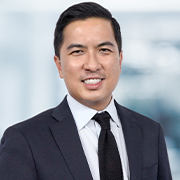
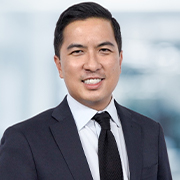
Thank you for listening into this episode of the TD Cowen Insights Podcast. We're recording live at our ninth annual Future of the Consumer Conference in New York City. My name is Oliver Chen, and I'm TD Cowen's Retail, New Platforms, and Luxury Analyst. I'm really excited to host this episode with Martin Beer, LuxExperience's Chief Financial Officer. Martin oversees all finance, investor relations, risk management, and legal functions for the group, and has held this role since 2019. The company has recently transformed from Mytheresa to LuxExperience following the acquisition of YOOX NET-A-PORTER, so this is a really phenomenal time to be with you, Martin. Thanks so much.
Dr. Martin Beer:
Yeah, good to be here. And it's really good to hear the name, LuxExperience, because we all get to get accustomed to it.
Oliver Chen:
So you officially became LuxExperience in early May. For those less familiar, can you provide an update on the platform? What was the key rationale here?
Dr. Martin Beer:
Obviously, with the acquisition, we are now the undisputed leader in global online multi-brand luxury experience. So with the number one platform, this is always good, operating multiple store fronts, multiple brands, and we will report along the three segments, Mytheresa Luxury, NET-A-PORTER, MR PORTER Luxury, and off-price with YOOX and THE OUTNET. And it's great that those three segments and the five different stores are quite differentiated, quite different from it. You can see that with a very low customer overlap of around 10%.
Oliver Chen:
Why is there low customer overlap? I've shopped actually at all of these personally. What do you see as the synergies between them and how you'll run and think about operating them?
Dr. Martin Beer:
Yeah, if you look at the brands, obviously, they all operate in curated luxury, so the high-end, similar AVOs, similar focus on top customers. But what makes it different also in the view of the customer is the small things. So NET-A-PORTER, MR PORTER, is more fashion-forward. Mytheresa is more established luxury. So at NET-A-PORTER, you see higher number of brands, higher brand fluctuation, also more younger brands, up-and-coming brands. So they have a higher brand turnover. At Mytheresa, that's more established luxury. And NET-A-PORTER Luxury, MR PORTER, is about 50% in the US. And therefore, also, from the geographical focus, there's a different or higher dominance of brands that cater more towards the US market. So on that side, also, a bit more inspirational discovery at NET-A-PORTER and MR PORTER. And obviously, Mytheresa is key on top customer attraction and retention with the events with the capsules, I think we're quite unique in that way.
Oliver Chen:
What are your thoughts, Martin, in terms of people, culture, and the merchandising group, as well as tech stack?
Dr. Martin Beer:
You see, from the very small customer overlap, that exactly what we wanted to do and expected to do is to grow the individual brands separate from each other. So we will continue to have separate buying, merchandising, marketing teams to really continue to focus on their respective market positioning and their target group. But you're right. In the back end, there will be synergies. So the synergies are around four core buckets of synergies. First one is, you called that out, the IT. And that's why also Richemont picked us as the right partner, because we have embarked out our own IT project and have developed the IT stack very successfully, three years ago, and have a modular setup service-oriented tech architecture, that is ideal for luxury. And therefore, the first synergy is to move NET-A-POTER and MR PORTER on our IT stack, on our IT platform, and on the YOOX and THE OUTNET side, to really refocus the IT, to get rid of a lot of complexity, make it much leaner, also resembling the operational requirements in the IT.
So that leads into the second bucket of synergies is the operational excellence. So we will redefine a lot of processes, simplify, making leaner, making more stringent. And that reflects also in the IT, but the operational footprint, the warehouses, how the different warehouses operate together. This will be [inaudible 00:05:45]. This will change and also leads them to our advantage of being the operational leader when we are with ... Mytheresa has always had the advantage of being really the lead on operational excellence. And that's the second bucket of synergies.
Third bucket is we're able to show profitable strong growth. At NET-A-PORTER and MR PORTER, they had a customer detox, accepting revenue decline, focusing more on a profitable core. But we will, after certain buying cycle, reembark those brands into growth, making them grow again, because this is needed.
And the fourth bucket is the classical synergies, indirect spend and corporate side. And we both have the same suppliers and payment and shipping, obviously working also on having corporate functions set together and having the classical synergies. And with those four buckets, IT, operational excellence, profitable growth, and indirect spend and corporate, we will be able to reduce the SG&A cost ratio significantly, because there, as seen in the investor presentation, is the major difference in profitability. They have 800 basis points, higher SG&A cost ratio than we do. We have 14%, and they have 22%. And also, on the off-price, significant gap on SG&A cost ratio versus the benchmark operator.
Oliver Chen:
Martin, where do you see your EBITDA margins going over time? And where are they currently?
Dr. Martin Beer:
Yeah, that's why we guide it, exactly because of this topics, to seven to 9% adjusted EBITDA. And remember, Mytheresa has come from 9%. Fiscal year '22, we had 9% adjusted EBITDA. So the seven to 9% is our also long-term average. Obviously, right now, we're in a unique situation. We want to come back to that. NET-A-PORTER and MR PORTER is around 3% adjusted EBITDA and has significantly higher SG&A cost ratio. So with the reduction of the SG&A cost ratio, a bit more marketing, what they need to reembark on growth, so there is a bit of a change in the other cost lines, cost margin, a bit more improving across margin, a bit more marketing. But the heavy reduction of the SG&A cost ratio is the key focus area of reembarking there. And the same for the off-price business model, simplifying, leaner, reducing the operational footprint, significant reduction in SG&A cost ratio, that will lead or enable also the off-price being unprofitable today return to profitability.
Oliver Chen:
One of the very exciting parts of what you do is your amazing experiential physical events. I also believe in physical retail, stores and bricks plus clicks. What do you see happening with your events and your strategy to drive a lot of excitement, in terms of unique events for customers? How many do you do per year?
Dr. Martin Beer:
We showed, in the last quarter on this one page in the investor presentation, we did about 30, 30 top customer events in all continents. But you always have to start from the core essence of what Mytheresa does is... Why do top customers come to us and why they stay? Why is the loyalty of the top customer so high? It is because of the core essence of what we do, the curated offer. They love our buying and merchandising and our marketing. They love that. Obviously, the whole company really focuses on constantly improving the services that we showed towards a top customer, be it early access to new arrivals, having clear priority in shipping and service, having a personal shopper with you that helps you, and as you said, is also the invitation to those top customer events. 30 in the last quarter, in the last quarter, just in the third quarter alone.
And this is a unique setup to engage with the top customer. What's stuck out last quarter was the one in Aspen, surely, where we had this après ski event together with the Bemelmans Bar, also experiencing the Mytheresa world. And what really struck me was that, from the 2000 people that signed up, that we got the contact details, more than half have not yet shopped with Mytheresa. Everybody who's skiing in Aspen should be a Mytheresa customer.
Oliver Chen:
Yeah, big opportunity in synergy. Speaking of customers, we're in a really rocky world now with volatile consumer confidence and many, many geopolitical events. What's happening with your customer, the luxury market, it's been tough. There's been a lot of markdowns.
Dr. Martin Beer:
Yeah, but we stay true to not follow any markdown strategy. The good thing is that the situation is in a much better shape than a year ago, one and a half years ago, where there was too much inventory in the market and crazy markdown strategies had a bigger impact on the customer. Right now, the supply, the inventory of the market is not there. So if somebody is heavily discounting, the effect is much lower. So from an inventory perspective, from a competition perspective, the industry is in a much better shape. But obviously, right now, and you are well aware of this, the customer uncertainty, given the tariff situation, everything, is the overlay. Always the question that you ask is the, what's your customer rating, one to 10? In January, February, I would've given you a nine. Right now, especially in the US, it is more like a six or a seven, but we see it as a temporary situation. And hopefully, this will soon improve.
Oliver Chen:
Okay. And thanks for the rating. What about the Asian customer, the European customer? How are you characterizing them now?
Dr. Martin Beer:
They're in good shape. If you see, and we call that out, that, in the last quarter, Europe grew 8%, which is great. Obviously, Europe is not Europe. There's differences in country, and that also fluctuates. Right now, Italy, France, Switzerland are much more stable and focusing on growth. Some others, like Germany, Netherlands, Austria, are weaker. But overall, good sentiment and better sentiment in Europe. Asia stays sticky, so no news there on a change in the Asian behavior. Whether the tax breaks really have an effect needs to be seen. But the overlay is the current tariff situation. This is clear. This is clear, the overlay, because everybody also runs or manages companies that are affected by that or are tied to the stock market. So this is the current situation that everybody's looking into. Yeah.
Oliver Chen:
Martin, we'll close it out on the future of luxury. We're all about spotting what's happening next. What do you believe is the future of luxury? How will shoppers change how they shop? And what brands will they buy?
Dr. Martin Beer:
Luxury, as you know, is about desire, scarcity, emotion, inspiration, setting yourself apart, self-expression. And those human characteristics will always be there. And in the last one to two years, you saw there's a strong focus from the brands on quiet luxury. And therefore, with the quite significant designer changes in all brands and multiple brands that are going on, we expect that there will be a much stronger focus on newness, freshness, expression. And that will help also the luxury to embark on the next growth trajectory.
Oliver Chen:
Well, Martin, it was really exciting to sit with you, amidst a lot of powerful change and synergies and innovation. And you've been steadfast about managing and executing to thinking about shareholder value. Thanks for your time today.
Dr. Martin Beer:
Thanks, Oliver. Good to be here.
Speaker 1:
Thanks for joining us. Stay tuned for the next episode of TD Cowen Insights.




 Canada




 ブックマークに追加